
I am in the middle of figuring this out — and I am writing it down as I go.
Twelve years in hospitality. A body that has been telling me something for years. And a small site that documents what I am learning as I try to build a different kind of life.
My story starts as a teenager
I found my way into hospitality when I was sixteen. At the time it felt exciting — fast-paced, social, always something happening. I had no idea what twelve years of that work would do to my body.
I started on day shifts — early mornings, long hours on my feet, carrying and rushing. By the time I was twenty, I was taking on overnight shifts too. That is when the physical toll really started to compound. My body never quite got to fully recover — working through the night, sleeping at odd hours, always on the move.
It is the kind of work that feels manageable when you are young. But the physical toll is cumulative. By my mid-twenties, the wear and tear started showing up in ways I could not ignore anymore.
I tried everything — and nothing fully worked
When the pain became a regular part of my life, I did what most people do — I went looking for help. After overnight shifts my legs ached so badly I could barely walk to my car. My lower back was a constant source of tension that never fully released. My shoulders felt like they were permanently knotted.
I tried regular massages, which felt amazing in the moment but never lasted more than a few days. I saw a chiropractor, who helped with alignment but could not explain why the pain kept coming back. I tried acupuncture, which was genuinely soothing but still only a temporary fix.
The frustrating thing was not that these therapies were useless — they all helped to some degree. The frustrating thing was that the relief never lasted. Within days or weeks, the pain would return. I was spending significant time and money treating symptoms, but nothing was actually solving the problem.
The moment I started questioning everything
When I started spending more time working at a desk as a supervisor, I noticed something familiar — the same aches, the same tension, the same slow build-up of pain. My back, my shoulders, my neck. Different job, same suffering.
That is when I started questioning everything. Why was the pain following me from one type of work to another? What was the common thread? I started researching ergonomics — how the human body responds to prolonged sitting, what positions cause strain, what simple changes can reduce pain at the source.
What I discovered was that the pain was not inevitable. It was not just “wear and tear” from years of hospitality work or something I had to live with forever. A lot of it was caused by how I was positioned — and that was something I could actually do something about.
Then came the harder question. Knowing the right answer is not the same as actually fixing the problem. So I started, slowly, with what I could afford and what I could fit into my shifts.
Where I am right now
I want to be honest with you. I have not finished fixing this. I am in the middle of it. This site documents what I am trying, what is working so far, and what I am still researching for myself.
Added a lumbar support cushion to my chair
I bought an Everlasting Comfort lumbar cushion recently — the same one I recommend in my back pain guide. It has been comfortable from day one. My posture feels better and my lower back is less tight by the end of a long shift.
Upgrading to a proper ergonomic chair
I have spent months researching ergonomic chairs. I have written a full guide based on that research — but I have not bought one for myself yet. The lumbar cushion is the cheaper, faster fix while I figure out whether the full chair upgrade is the right next move for me.
Adding a sit-stand desk to my home setup
Same as the chair — I have done the research and written the guide. The desk is a bigger purchase and I want to make sure I get it right. I will update my notes here when I do.
Movement breaks during long shifts
The one fix that costs nothing. I have started using my phone alarm during the night shift to remind myself to stretch and move every 45 minutes. It does not always work — sometimes I am too busy. But on the nights I remember, my body feels noticeably better the next morning.
Switching to an ergonomic mouse
I still use a regular Apple mouse. I do not have wrist pain, so this has not been a priority for me personally. I have written a research-based guide for people who do, but I am being upfront — this is one I have not made the switch on myself.
About this site, and how it sustains itself
I want to be upfront about how Desk Pain Free works, because most affiliate sites pretend to be objective when they are not.
This is a small affiliate site I am building on the side of my day job at a five-star hotel in Toronto. When you click a product link on this site and buy something, I earn a small commission from Amazon. That commission costs you nothing extra. It is how the site sustains itself and pays for the time I put into researching and writing.
Here is what that means in practice. I will never recommend a product I have not researched carefully. When I have personally used something, I will tell you. When I have not, I will say so clearly — like the chair, the standing desk, and the ergonomic mouse on this site, all of which I have researched but not personally bought yet. Honesty about what I have actually tested matters more to me than maximizing affiliate revenue.
This site is also one piece of a bigger project I am building on the side. I write about that project in my second book, Alive After Hours. The site itself is one of the things the book documents. If anything you read here resonates with you, you might find more in the book.
The short version
I genuinely use some products on this site. I have researched the others carefully but have not personally bought them yet. I will always tell you which is which. The affiliate income helps me keep doing this work — but it never determines what I recommend.
The books I have written
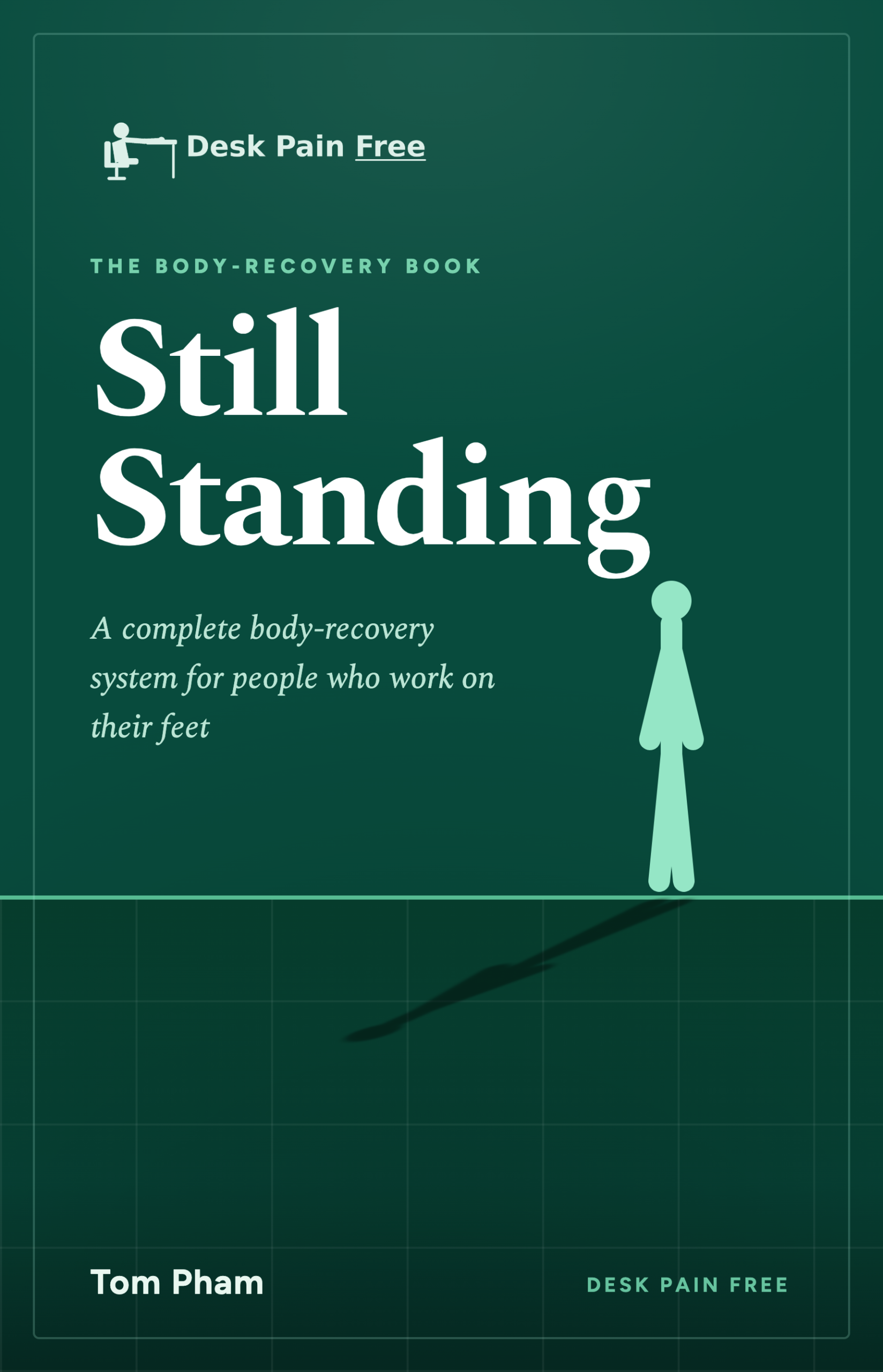
Still Standing
New · the book about this site’s topicThe book I most wish I’d had at twenty-two. A complete body-recovery system for people who work on their feet — why your body breaks down, a protocol built around a real shift, the honest buy-list in order, and printable cards and a tracker to make it stick. It is the deep version of everything I write about here.
Relief you rent forever. A fix you buy once.

Pursuit of Success in a Foreign Land
My first book. The story of arriving in Canada from Vietnam at fifteen years old with my twin brother Jerry, unable to speak English, and the slow years of figuring out how to build a life here. Failing the IELTS English exam three times. Working my way into my first hospitality job. Reading my first books in English late at night after shifts.
If you have ever felt invisible in a place that was supposed to be your fresh start, this book is for you.
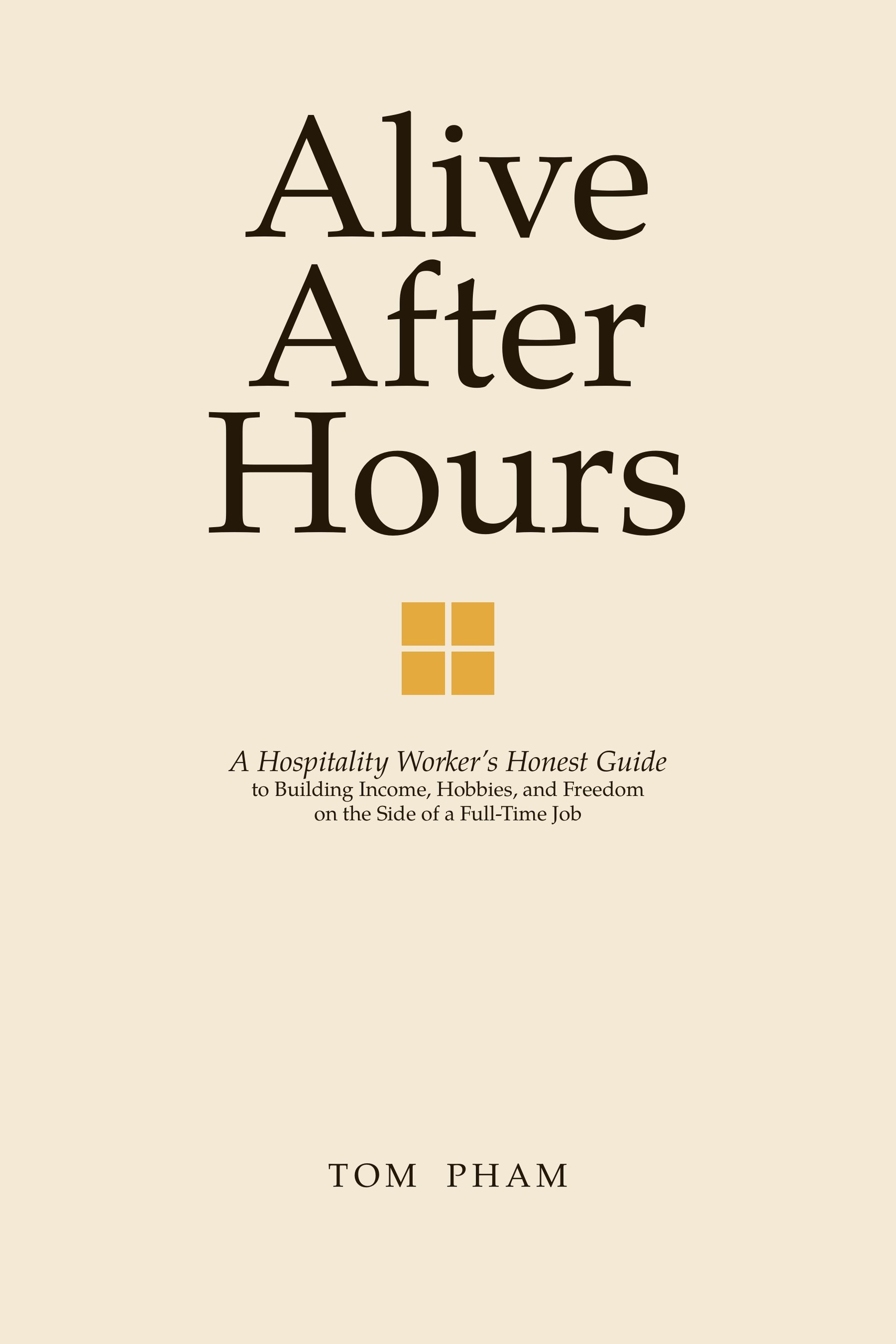
Alive After Hours
A Hospitality Worker’s Honest Guide to Building Income, Hobbies, and Freedom on the Side of a Full-Time Job
You shower. You get dressed. You head out the door — but your heart is not in it. The honest account of working a full-time job while quietly building something on the side.
If you want to follow along with what I am building, you can find me on Instagram at @tomphamm.
Why I built Desk Pain Free
I built this site because I spent years suffering unnecessarily — and I do not want that for you. The information that helped me start was not hidden or complicated. I just needed someone to point me in the right direction. Most affiliate ergonomics sites are written by people who have never actually had the kind of body pain they are writing about. I have. I am still working through it. That is the difference I am trying to bring.
If you are dealing with desk pain — whether you have been at a desk your whole career or you are transitioning from physical work like I am — I genuinely believe what I am learning here can help you too. We can figure it out together.
Start where I started
The most affordable first step for most people is the same one I made: a proper lumbar support cushion on your existing chair. From there, you can decide whether you want to upgrade further.
Read the back pain guide See all my picksPrefer a free read first? Get the five fixes I wish I’d tried sooner →